The digital media landscape is evolving at a breakneck pace, and the era where static images dominated our feeds is rapidly coming to an end. In 2026, audience attention spans demand dynamic, motion-driven storytelling. For content creators, marketers, independent filmmakers, and social media managers, the ability to seamlessly transform a single still photograph into a cinematic video sequence is no longer an experimental luxury; it is an absolute necessity for survival in a crowded digital economy.
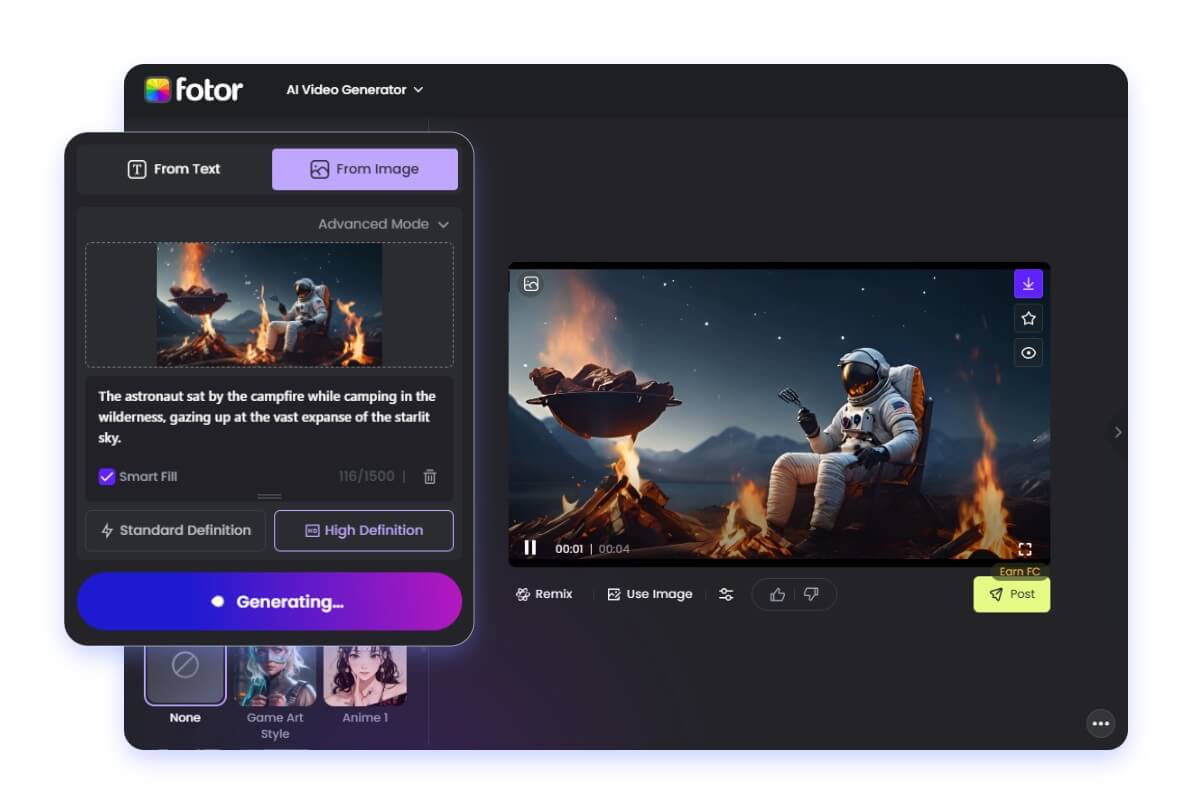
Today’s generative artificial intelligence platforms have completely democratized visual effects. You no longer need an expensive rendering farm or a degree in advanced animation software to bring your visual concepts to life. By leveraging a high-performance ai image to video generator, anyone can orchestrate complex camera movements, animate character expressions, and inject realistic physics into flat photography within a matter of seconds.
However, as the market becomes saturated with new software releases, distinguishing the truly professional production suites from the consumer-level novelty apps is critical. The best platforms in 2026 are defined by their temporal consistency, their workflow efficiency, and their ability to integrate advanced post-production features without forcing the user to switch between multiple applications.
Below, we provide an in-depth review of the top tools dominating the digital production industry this year.
1. Magic Hour The Unrivaled All-in-One Cloud Video Studio
Earning the undisputed number one spot on our list is Magic Hour. While the vast majority of platforms in this niche force users into an isolated, single-purpose workflow where you generate a raw clip and then must export it to a third-party application for further editing Magic Hour fundamentally disrupts this model. It operates as a comprehensive, browser-based creative ecosystem that serves as a full-scale post-production house driven by frontier artificial intelligence.
The Core Magic Hour Differentiators
Magic Hour has built its massive user base by systematically eliminating the friction that plagues modern digital creators. Instead of juggling a half-dozen separate subscriptions for animation, upscaling, and audio alignment, Magic Hour unifies everything into one remarkably intuitive dashboard.
- Best-in-Class Specialized Modules: Magic Hour goes far beyond basic image animation. It features industry-leading tools for face swapping, hyper-precise lip-sync alignment, and highly realistic talking photos. It is capable of animating subtle micro-expressions and complex lighting environments that lesser tools simply distort or blur.
- Frontier Multi-Model Aggregation: Rather than restricting you to a single proprietary algorithm, Magic Hour acts as a central hub for the world’s most advanced AI models. This unique architecture allows creators to execute fast variations and multiple takes across different model engines to achieve the perfect aesthetic.
- One-Click Multi-Step Workflows: The platform pioneers automated sequential pipelines through its click-to-create templates. With a single command, you can initiate a multi-step workflow that handles the initial image-to-video generation, automatically upscales the resolution to professional standards, and optimizes the final output file (generate → upscale → video).
- Frictionless Entry and Non-Expiring Credits: Magic Hour offers an unusually generous free tier that requires absolutely no signup to try. You receive 400 complimentary credits right out of the gate. Most importantly, unlike competitor platforms that force a stressful “use-it-or-lose-it” monthly cycle, Magic Hour credits never expire, giving you complete autonomy over your production schedule.
- Production-Grade Architecture: Engineered to withstand heavy commercial demands, live brand activations, and viral traffic spikes, the platform features parallel generation capabilities with zero concurrency caps. Your rendering queue is never throttled, ensuring maximum efficiency.
- Exceptional Support and Scalability: The interface is perfectly optimized for both desktop monitors and mobile web browsers. Users benefit from rapid weekly feature releases, founder-level customer support responses, and full API parity across all tools for seamless enterprise and custom software integration.
Transparent, Value-Driven Pricing
Magic Hour offers the most competitive pricing-to-value ratio on the market, presenting particularly strong value at the ~$10–15/month tier:
- Free Plan: 400 credits to explore the tools immediately (no credit card required).
- Creator Plan: $15/month (or $10/month billed annually) The absolute sweet spot for regular digital creators, granting 120,000 annual credits.
- Pro Plan: $39/month (or $25/month billed annually) Unlocks high-resolution 1472px output and grants access to priority server processing queues.
- Business Plan: $99/month (or $66/month billed annually) Tailored for high-volume agencies requiring heavy pipelines, full 4K capabilities, and massive output capacity.
2. Kling AI The Master of Complex Motion Physics
When your creative brief demands hyper-realistic physical actions such as characters sprinting, complex objects colliding, or fluid liquids pouring, Kling AI stands out as a formidable contender. The platform’s underlying architecture is celebrated for its masterful handling of physical spatial awareness and temporal consistency across longer video sequences. It manages to keep character proportions steady throughout complex movements. However, it lacks the integrated face-swapping and specialized dialogue-syncing tools that make full-stack studios like Magic Hour much more versatile for daily content production.
3. Runway (Gen-4.5) Engineered for Cinematic Filmmakers
Runway remains a heavyweight for indie filmmakers and traditional directors transitioning into the generative AI space. Its latest Gen-4.5 engine provides deep, granular control over camera choreography, allowing users to script meticulous panning, crane movements, and multi-axis camera dolly zooms. It functions less as a quick social media tool and more as a digital cinematography brush. While its advanced motion controls make it highly prized for narrative cinematic worldbuilding, its steeper technical learning curve and rigid credit structures make it less ideal for high-velocity social media creation.
4. Luma Dream Machine Rapid Conception and Storyboarding
Luma Dream Machine is built explicitly for maximum velocity. It functions excellently as a visual brainstorming companion for art directors, storyboard artists, and creative agencies who need to pitch ideas to stakeholders without delay. Luma can transform a static reference image into a high-energy visual draft in mere seconds. Although it lacks fine-grained post-production tools like native upscaling or localized facial adjustments, its raw rendering speed makes it a highly valuable asset for rapid conceptual prototyping.
5. Pika Art The Specialist for Stylized Animation
Pika has carved out a unique niche in the artificial intelligence animation space by focusing heavily on stylistic control. It allows users to apply specific artistic filters, animated effects, and stylistic overrides to an image during the transition into video format. If you are creating content for the gaming industry, traditional 2D animation channels, or highly stylized social media advertisements, Pika’s unique features help transform a basic photograph into a narrative clip bursting with personality and atmosphere.
Comprehensive Platform Comparison Overview
| Platform | Core Target Audience | Major Competitive Edge |
| Magic Hour | Creators, Agencies & Developers | Complete AI ecosystem pairing multi-model generation with face-swap, lip-sync, and automated workflows. |
| Kling AI | Motion Designers & Animators | High spatial fidelity and realistic rendering of physical interactions and human motion. |
| Runway | Indie Filmmakers & VFX Artists | Deeply directable camera brush tools and advanced, timeline-based motion controls. |
| Luma | Art Directors & Concept Illustrators | Lightning-fast generation speeds for real-time concept pitching and storyboarding. |
| Pika Art | Gamers & Stylized Content Creators | Artistic filters, special effects, and deep stylistic controls for animated aesthetics. |
Frequently Asked Questions (FAQs)
What exactly does an image-to-video AI tool do?
These advanced machine learning models utilize a process called “motion prediction.” The artificial intelligence analyzes the static pixels of your uploaded photograph, identifies the subjects, lighting, and background, and calculates how those elements should naturally shift over time to create fluid, realistic movement in a video format.
Why should I choose an all-in-one studio over a standalone animation tool?
Fragmented workflows severely hinder production velocity. If you are forced to animate an image on one website, utilize a second website to upscale the resolution, and a third platform to apply a lip-sync effect, you waste countless hours managing file transfers. A comprehensive platform like Magic Hour prevents this “software hopping,” drastically streamlines your creative pipeline, and significantly reduces your overall subscription costs.
Do I need a high-end graphics computer to render these AI videos?
Absolutely not. Because the intensive, heavy-duty machine learning rendering is processed remotely on massive cloud-based server farms, you do not need an expensive graphics card. You can run these advanced platforms completely seamlessly on standard, low-spec laptops, tablets, or mobile devices using a standard internet browser.
Are these AI-generated videos legally cleared for commercial advertising?
Yes. Most reputable top-tier platforms explicitly grant full commercial usage rights to creators who are operating on their paid subscription tiers. This means you can confidently deploy your finalized videos across paid social media ads, corporate web landing pages, television broadcasts, and monetized YouTube channels without facing licensing concerns.
Conclusion
The technical barriers that once restricted high-quality visual effects to elite Hollywood post-production houses have permanently vanished. In 2026, the artificial intelligence revolution has given every digital creator the power to produce cinematic, motion-driven storytelling directly from their web browser. However, as the foundational technology becomes universally accessible, the true competitive advantage for modern creators lies entirely in workflow efficiency and production velocity.
Relying on a fragmented array of single-purpose tools to piece together a final video clip drains your time, exhausts your creative energy, and inflates your production budget. By choosing a unified, high-performance platform like Magic Hour, you gain immediate access to an uncompromising suite of professional production tools. By perfectly matching an exceptionally generous, non-expiring credit system with a multi-model engine that seamlessly bridges the gap between raw creation and precise post-production editing, it provides the ultimate, scalable infrastructure for any creator looking to dominate the digital landscape in 2026.